
| H.I.J.M.S. Aki |
|
|
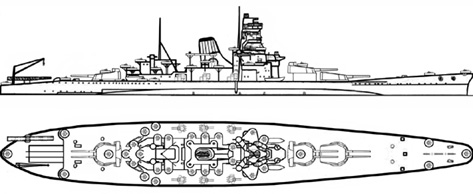
Specifications Ships in class (2) Dimensions: Performance: Armor: Armament: Aircraft: Operation History: Know by the allies as Ack and Mick, the two Aki class ships performed admirably during the course of the Pacific war. The Aki and Mikawa operated for the better part of their careers along side the Zuikaku, Shokaku and Hiryo. Only once during operations were they separated: during the Battle for Guadalcanal the Aki was assigned to escort Tanakas destroyer/supply ships on the night of November 30th, 1942. The force encountered a force of USN heavy cruisers and destroyers. The Aki was stationed behind the destroyers. The Americans lost the advantage of surprise. Tanakas destoryers turned, firing torpedoes as they fled. The Aki turned also, but did not retreat. Instead she turned to port 90 degrees. As the torpedoes struck the USN line the Aki opened fire. In the confusion of the battle the Aki was hit by 6 - 5" shells, narrowly escaped a spread of four torpedoes and escaped north. The Americans were not as lucky: the torpedo damage was considerable and with all four heavy cruisers hit, the addition of 14" shells falling around then did not help the situation. Three heavy cruisers were sunk (Northampton, Minneapolis and Pensacola) and two destroyers were sunk as well. Tanaka was able to unload his supplies and lost only a single destroyer to enemy action. So ended the Battle of Tassafaronga. The Mikawa was sunk along side the Fuso and Yamashiro during the extensive fighting for the Philippines. And the Aki fought along side the Yamato and Nagato - with nothing to show for it, but two 1,000lb bomb near misses, warping her hull and sending her to the repair yards at Kure. The Aki ended the war in a damaged state in the home waters. Special Notes: 1938 saw an important step in IJN building, design and modification. It was during this year that the Ise and Fuso class ships were stripped down and reworked to create faster, better ships. The 8 main turrets removed from these four ships were incorporated into a new design of ship - the pocket battleship in the truest sense. Borrowing the idea from the German pocket battleship design the Japanese refined and produced a far superior class. The Aki was "pocket" in length and number of guns only. The armor and speed of this class equalled that of any battleship being built at the time. These ships were destined to replace the Kongo class of battlecruiser as carrier escorts.. Indeed, the design was so successful that when the Ise and Hyuga were modified again (by having an additional 2 turrets removed each) two more Aki class hulls were laid down. Unfortunately before more than 5% complete (in 1944) the un-named "hulls" were cancelled. |